Time management is one of the most important skills a child can learn — yet it is one of the least taught. Many kids struggle with school not because they lack intelligence or motivation, but because they don’t know how to manage their time properly.
Parents often hear phrases like:
“I forgot.”
“I’ll do it later.”
“I didn’t have enough time.”
“I studied, but I still did badly.”
Behind these words is not laziness — it is a lack of structure, planning, and guidance.
In this guide, we’ll explain how to teach kids to manage their time, step by step, in a realistic and supportive way. Whether your child is in primary school, high school, or a demanding program like the IB Diploma Programme, this article will help you understand what works, what doesn’t, and how to support them without pressure.
At IB Demystified, we work with students worldwide through one-to-one online tutoring on Zoom, and time management is one of the biggest factors behind every academic turnaround we see.
Time management is not just about finishing homework faster. It shapes how a child:
Handles pressure
Approaches learning
Builds confidence
Manages stress
Prepares for adult life
Kids who manage their time well tend to:
Feel calmer about school
Perform better in exams
Avoid last-minute cramming
Develop discipline and independence
For students in academically demanding systems like IB, IGCSE, or A Levels, poor time management can quickly lead to burnout — even for strong students.
Before teaching time management, it’s important to understand why kids struggle with it in the first place.
Time management is a learned skill, not a natural talent. Many children are expected to “figure it out” on their own.
A big assignment or exam revision feels too large, so kids delay starting it.
Phones, games, social media, and streaming platforms silently consume hours.
As students grow older, the workload increases — but time-management guidance often does not.
This is especially true for IB students, who must balance multiple subjects, internal assessments, and exams at the same time.
Teaching time management works best when it matches a child’s developmental stage.
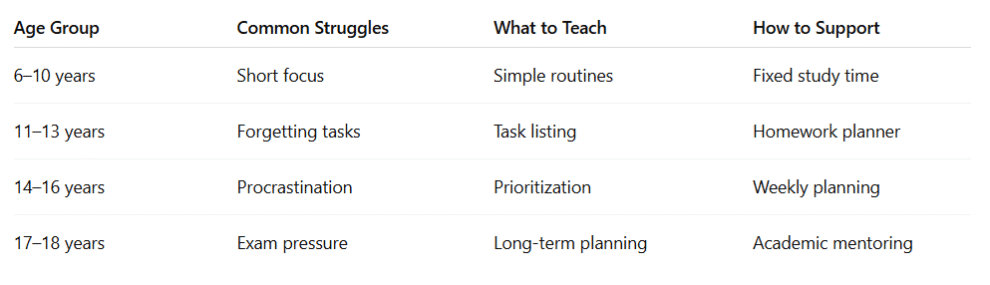
Expecting advanced planning from young children leads to frustration. The goal is progress, not perfection.
Teaching time management should feel supportive, not strict.
Consistency is the foundation. Set regular times for:
Studying
Breaks
Meals
Sleep
A predictable routine reduces resistance and builds discipline naturally.
Instead of:
“Study maths”
Teach:
Revise formulas
Solve 5 questions
Check mistakes
This reduces fear and helps kids start without procrastinating.
Teach kids the difference between:
Urgent tasks (due tomorrow)
Important tasks (exam preparation)
This helps them avoid last-minute panic.
Many kids think time management means “study more”. In reality, it means planning at different levels.
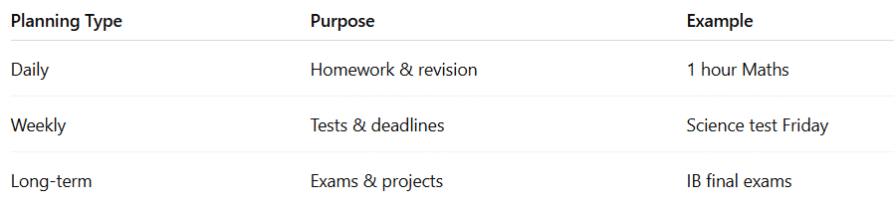
Students who learn all three levels feel more in control and less stressed.
A clear schedule makes expectations visible and realistic.
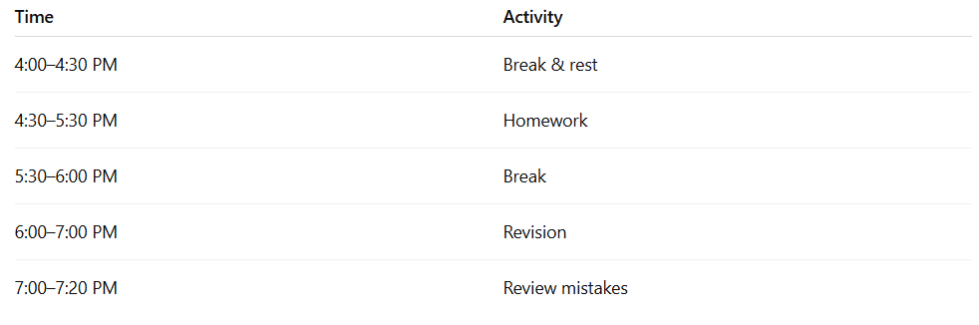
Good time management improves:
Focus
Retention
Confidence
Exam performance
Students who plan properly:
Avoid cramming
Revise regularly
Understand concepts deeply
Perform consistently across subjects
This is especially important in subjects like:
Maths
Physics
Chemistry
Biology
Economics
Business Management
English

The IB Diploma Programme is one of the most demanding academic systems globally.
IB students must balance:
Six subjects
Internal Assessments (IAs)
Extended Essay (EE)
TOK
Final exams
Without strong time management, even talented students feel overwhelmed.
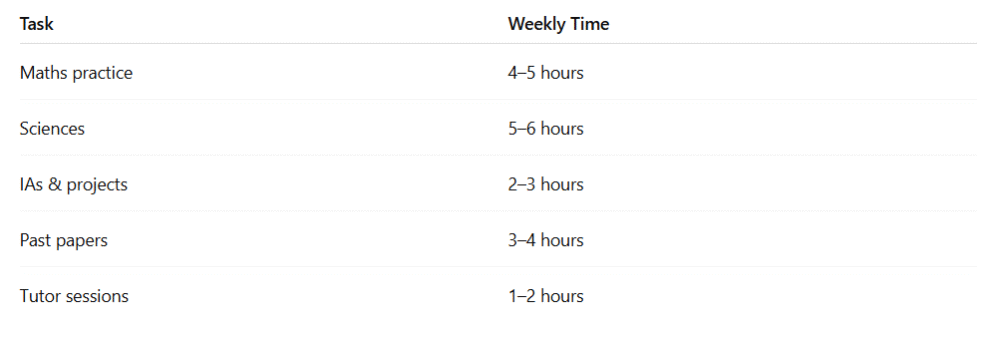
At IB Demystified, we help students plan this realistically through one-to-one Zoom tutoring.

Personalized tutoring allows:
Custom study plans
Clear weekly goals
Accountability
Reduced stress
Each subject needs a different approach. Our tutors guide students on how much time to spend and how to study effectively.
When students know what to do and when, anxiety decreases.
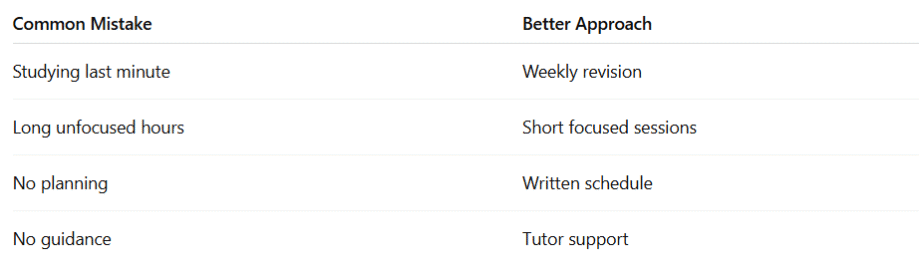
Parents should aim to:
Encourage consistency, not perfection
Praise effort, not just grades
Provide structure, not control
Ask questions instead of giving orders
Support works best when kids feel understood, not judged.
If a child:
Constantly misses deadlines
Feels overwhelmed
Avoids studying
Shows exam anxiety
Professional guidance can make a real difference.
IB Demystified offers:
IB-focused subject support
Exam preparation
Time-management coaching
At IB Demystified, we don’t just teach subjects — we teach how to learn.
We help students:
Build realistic study routines
Manage academic pressure
Improve exam performance
Gain confidence and independence
Our tutors work with students globally across Maths, Sciences, Humanities, and Languages.

Basic routines can start as early as primary school, with skills developing over time.
Breaking tasks into small steps and setting short goals works best.
Yes. IB students face heavy workloads, making planning essential.
Yes. One-to-one tutoring provides structure, accountability, and guidance.
Quality and consistency matter more than long hours.
Yes. Time management is built into our tutoring approach.
Absolutely. Personalized Zoom sessions allow focused support and flexibility.

IB Demystified is a trusted online learning platform led by certified IB examiners and educators.
© 2026 IB Demystified LTD ALL RIGHTS RESERVED. Powered by AfiaDigital
WhatsApp us
I am a
Teachers log in with the details IB Demystified sent them. No account yet? Please contact us.