Understanding GCSE results can feel confusing, especially since the old A*–G system was replaced. In this guide, GCSE grades explained in plain English, we’ll break down the new 9–1 grading system, what each grade really means, and how students in England and Wales are assessed.
Whether you’re a student, parent, or teacher, this article will help you confidently interpret GCSE grades and make informed academic decisions.

GCSEs (General Certificate of Secondary Education) are exams taken by students aged 14–16 in the UK. They play a big role in:
Sixth-form and college admissions
Subject choices for A-levels, IB, or vocational courses
Building strong academic foundations
That’s why explaining GCSE grades clearly is so important.
In recent years, GCSEs moved to a new numerical grading system.
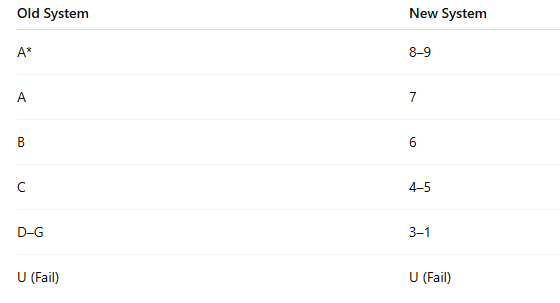
This change was introduced to better distinguish top-performing students.
Parents often worry whether a Grade 4 is “good enough.”
Here’s a quick guide:
Grade 4 = Minimum pass
Grade 5 = Strong pass (preferred by colleges)
Grades 7–9 = Competitive for top schools
For IB or A-level pathways, grades 6–7+ are usually recommended.
Let’s explain the new GCSE grades in simple terms.
Grade 9 – Exceptional performance (top ~3–5%)
Grade 8 – Very high achievement
Grade 7 – Strong performance (old Grade A)
Grade 6 – Good pass
Grade 5 – Strong pass (higher than old Grade C)
Grade 4 – Standard pass
Grade 3 – Below pass
Grade 2 – Low attainment
Grade 1 – Basic knowledge shown
U – Ungraded (no certificate awarded)
👉 Grades 4 and above are considered a pass, but many colleges prefer grade 5 or higher in key subjects.
GCSE grades are not fixed percentages.
Grade boundaries change every year depending on:
Exam difficulty
Student performance nationwide
Subject and exam board
For example:
A Grade 7 in Maths one year might require 65%
The next year, it might be 70%
This system ensures fairness across exam sessions.
Example 1:
A student scores 68% in GCSE Biology.
That year’s boundary for a Grade 6 is 66%.
✅ Final Grade: 6
Example 2:
A student scores 52% in English Language.
Grade 4 boundary is 55%.
❌ Final Grade: 3
This shows why boundaries matter more than raw percentages.
Wales uses a mix of grading systems:
Many GCSEs still use A–G*
Some reformed subjects follow 9–1
Always check:
The exam board
Subject-specific grading criteria
Welsh students applying internationally should ask schools how grades are converted.
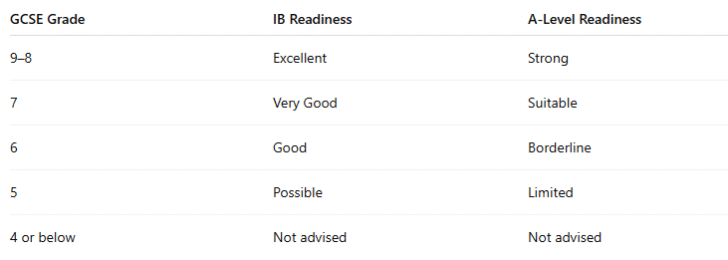
Now you have a clear, confident understanding of the GCSE grading system explained step by step. From the new 9–1 scale to grade boundaries and real examples, GCSE grades don’t have to be confusing.
👉 Next step:
If you’re planning A-levels or the IB Diploma, focus on strong GCSE foundations, especially in Maths, English, and Sciences.
At IB Demystified, we help students bridge the gap between GCSE success and higher academic pathways with expert guidance and tutoring.
A Grade 5 or above is considered a strong pass. Grades 7–9 are excellent.
No. Grade 4 is a standard pass, but many colleges prefer Grade 5.
To better differentiate top students and improve grading accuracy.
No. They change yearly based on exam difficulty and performance.
Yes, especially Maths and English, alongside A-levels or IB results.
Typically, Grade 6–7+ is recommended for IB subjects.
Some subjects still use A–G*, so always check your exam board.

IB Demystified is a trusted online learning platform led by certified IB examiners and educators.
© 2026 IB Demystified LTD ALL RIGHTS RESERVED. Powered by AfiaDigital
WhatsApp us
I am a
Teachers log in with the details IB Demystified sent them. No account yet? Please contact us.