
Understanding chemistry paper 1 topics is one of the most important steps in preparing for your exams. Many students ask what topics are in chemistry paper and how Paper 1 differs from other chemistry exams. This guide answers every key question clearly, in one place.
Whether you are studying GCSE Chemistry, Combined Science, or reviewing AQA chemistry paper 1 topics, this article explains the syllabus in full detail and helps you revise with confidence.
Chemistry Paper 1 focuses on the fundamental principles of chemistry. These topics build the base knowledge needed for more advanced chemistry in later papers.
Across most exam boards, especially AQA, paper 1 chemistry topics include:
Atomic structure and the periodic table
Bonding, structure, and properties of matter
Quantitative chemistry
Chemical changes
Energy changes
These areas are assessed through written questions, calculations, and required practical knowledge.
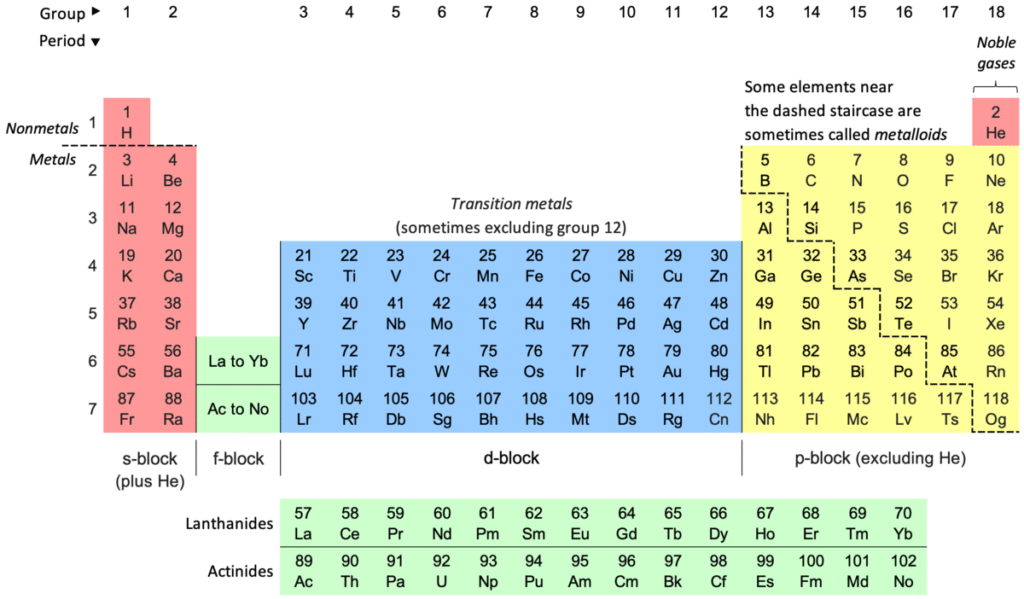
This topic explains what matter is made of and how elements behave.
Students learn:
Atoms, elements, compounds, and mixtures
Protons, neutrons, and electrons
Atomic number and mass number
Isotopes and relative atomic mass
Electron shells and configurations
The periodic table section covers:
How the periodic table is organised
Trends in groups and periods
Properties of Group 1 alkali metals
Properties of Group 7 halogens
Noble gases and their stability
These ideas appear frequently in AQA GCSE chemistry paper 1 topics.
This topic explains how atoms join together and how bonding affects material properties.
Covered content includes:
Ionic bonding and ionic compounds
Covalent bonding and molecules
Metallic bonding
States of matter and changes of state
Simple molecular substances
Giant covalent structures (diamond, graphite, graphene)
Polymers and nanomaterials
Exam questions often test your ability to explain why substances behave the way they do, not just recall facts.
Quantitative chemistry focuses on chemical calculations, which are essential for high marks.
You will study:
Relative atomic mass (Ar)
Relative formula mass (Mr)
Balancing chemical equations
Conservation of mass
The mole concept
Reacting masses
Limiting reactants
Concentration calculations
Percentage yield and atom economy
These calculations are a key part of GCSE chemistry paper 1 topics and are heavily tested in AQA exams.
Chemical changes explore how substances react and how new substances are formed.
Topics include:
Reactivity series of metals
Extraction of metals
Oxidation and reduction
Acids, bases, and alkalis
Making salts
Neutralisation reactions
Electrolysis and half equations
This section combines theory with practical understanding and often includes required practical questions.
Energy changes explain whether reactions release or absorb energy.
You will learn about:
Exothermic reactions
Endothermic reactions
Reaction profiles
Activation energy
Bond energy calculations
Understanding energy transfers helps students answer higher-mark questions confidently.
Many students ask what topics are in chemistry paper 1 combined science. The content is similar to separate chemistry but with reduced depth.
Combined science students cover:
Atomic structure
Bonding and structure
Quantitative chemistry
Chemical reactions
Energy changes
However, calculations and explanations are less detailed compared to separate science chemistry.
For AQA students, chemistry paper 1 topics AQA are assessed using:
Multiple-choice questions
Short-answer questions
Calculation-based questions
Extended response questions
Required practical knowledge
Understanding the specification helps students focus revision on what truly matters.
The GCSE chemistry paper 1 exam tests:
Knowledge and understanding
Mathematical skills
Application to unfamiliar contexts
Practical skills and analysis
Strong explanations and clear working are essential for top grades.
Some students compare GCSE with AQA A level chemistry paper 1 topics. While both papers share calculation and theory skills, A level content is more advanced and includes deeper mathematical and analytical chemistry.
GCSE Paper 1 focuses on foundational understanding, making it accessible with structured revision.
To revise successfully:
Use the AQA specification as a checklist
Practise calculations regularly
Review required practicals carefully
Answer past paper questions
Focus on explaining answers clearly
Knowing what topics are on chemistry paper 1 allows you to revise efficiently and confidently.
IB Demystified is a trusted online learning platform led by certified IB examiners and educators.
© 2026 IB Demystified LTD
ALL RIGHTS RESERVED.
Powered by AfiaDigital
WhatsApp us