
Many students studying English, especially in programs like the IB Diploma, often ask: what is the difference between English Literature and English Language? Although both subjects involve reading and analyzing texts, they focus on very different aspects of communication.
Understanding this difference helps students choose the right subject and improve their analytical skills in exams and essays.
In this guide, we will explain the key differences between English Literature and English Language, as well as important language features and language techniques used in textual analysis.
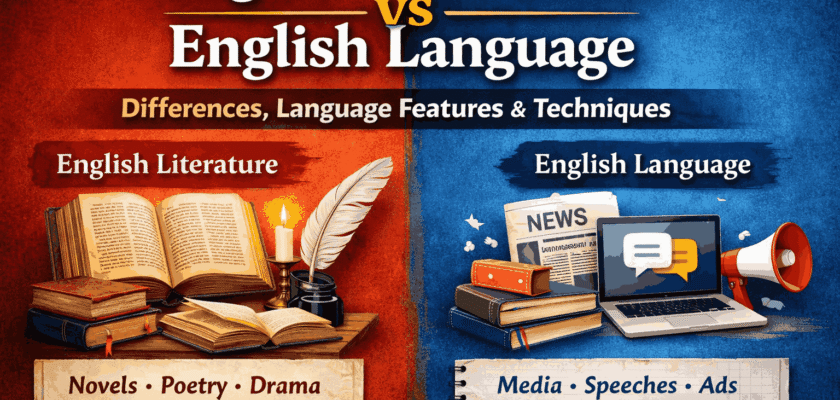
English Literature focuses on studying literary works such as:
novels
poetry
plays
short stories
In literature classes, students analyze themes, characters, symbolism, and the author’s message. The goal is to understand how writers use storytelling and literary techniques to express ideas and emotions.
For example, when studying a novel, students may analyze:
character development
themes such as love or conflict
symbolism and imagery
narrative structure
English Literature encourages deeper interpretation of texts and focuses strongly on creative expression and meaning.
English Language, on the other hand, focuses on how language works in real-life communication. Instead of studying only novels or poems, students analyze everyday texts such as:
advertisements
speeches
news articles
social media posts
The goal of English Language studies is to understand how writers and speakers use language to influence audiences.
Students often analyze language features and techniques to see how communication works in different contexts.
For example, an advertisement may use persuasive language to attract customers, while a speech may use emotional language to inspire an audience.
Although both subjects involve analyzing texts, their focus is different.
English Literature
focuses on fictional and literary texts
analyzes themes, characters, and symbolism
explores artistic and creative writing
English Language
focuses on real-world communication
analyzes how language is used in society
studies language features and persuasive techniques
In simple terms, literature studies stories, while language studies communication.
Language features are specific elements of language that writers use to communicate ideas effectively.
These features help shape how a message is understood by readers or listeners.
Common language features include:
tone
vocabulary choice
sentence structure
imagery
figurative language
For example, a writer might use formal language in an academic essay but informal language in a blog post or conversation.
Understanding language features helps students analyze texts more deeply and explain how communication works.
Language techniques are tools that writers use to make their writing more powerful and engaging.
Some of the most common techniques include:
A metaphor compares two different things to create meaning.
Example:
“The classroom was a battlefield during the debate.”
A simile compares two things using words like “like” or “as.”
Example:
“Her smile was as bright as the sun.”
Rhetorical questions are questions asked to make readers think rather than to get an answer.
Example:
“Who wouldn’t want success?”
Repetition emphasizes important ideas by repeating words or phrases.
Example:
“We will work harder. We will improve. We will succeed.”
Emotive language is used to create emotional responses in readers.
This technique is often used in speeches, advertisements, and persuasive writing.
Understanding language features and techniques helps students:
analyze texts more effectively
improve essay writing
understand persuasive communication
perform better in English exams
These skills are especially important for students studying IB English Language and Literature, where text analysis plays a major role.
Students often wonder which subject is better for them.
Choose English Literature if you enjoy:
reading novels and poetry
analyzing themes and characters
discussing symbolism and literary meaning
Choose English Language if you enjoy:
analyzing advertisements and media
understanding how communication influences people
studying language in real-world contexts
Both subjects develop strong critical thinking and writing skills.
Understanding the difference between English Literature and English Language helps students choose the subject that best matches their interests and academic goals.
While English Literature focuses on analyzing stories and literary works, English Language explores how communication works in everyday life.
By learning about language features and techniques, students can develop stronger analytical skills and become more effective readers and writers.
These skills are valuable not only in academic studies but also in professional communication and future careers.
IB Demystified is a trusted online learning platform led by certified IB examiners and educators.
© 2026 IB Demystified LTD
ALL RIGHTS RESERVED.
Powered by AfiaDigital
WhatsApp us